Plates No. 002
The grid
12 July 2026
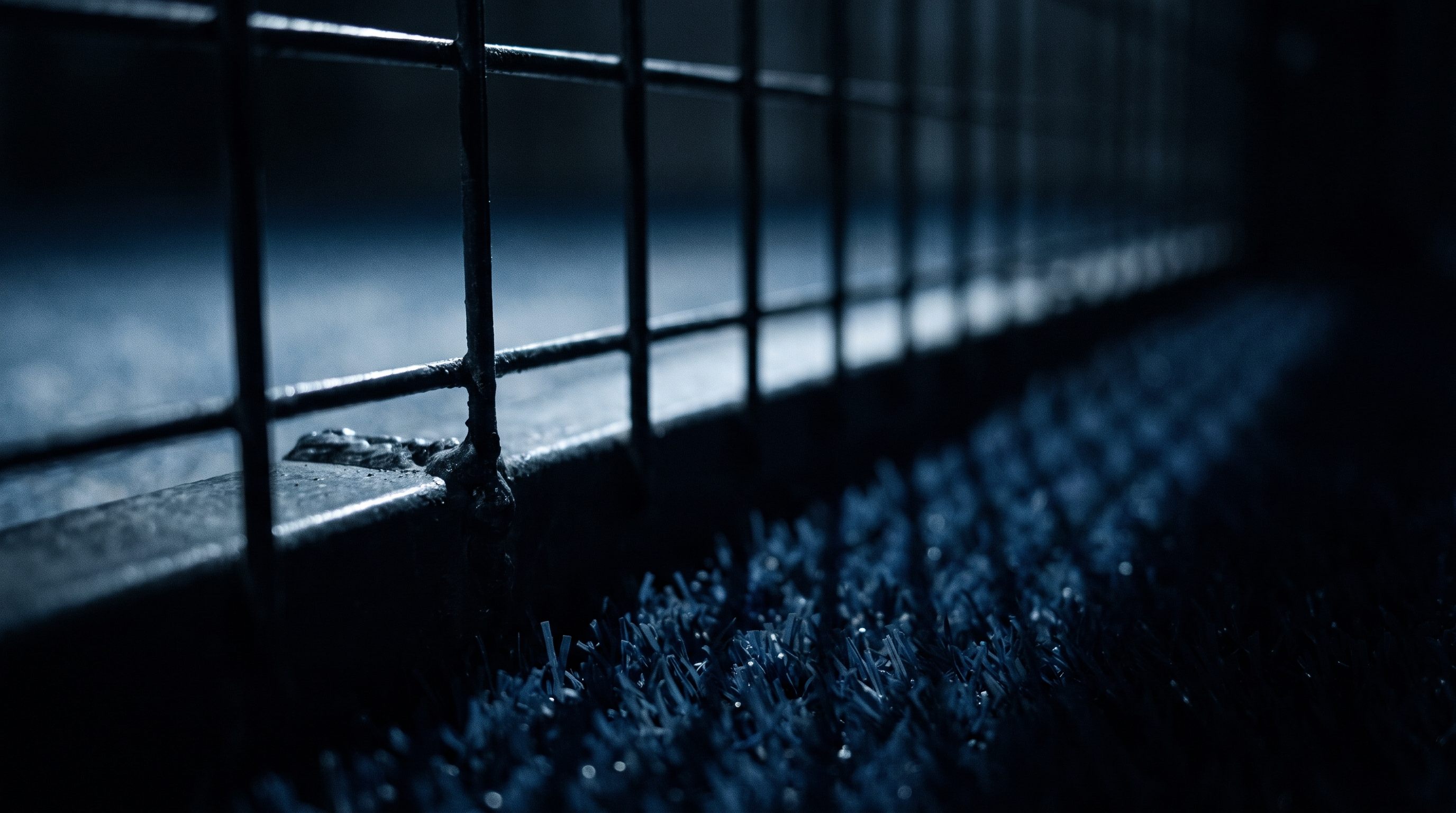
A study, not a document. One frame, built in the studio: welded rectangular mesh under a single cold light, raking low across the steel, throwing the grid back onto dark blue turf as shadow.
Look at the joint first. This fence is welded, not woven: every crossing of wire fused, a small permanent decision repeated a few thousand times per panel. Horizontal wires, vertical wires, rectangles stacked in courses like brickwork. The light finds the top edge of each wire and leaves the rest alone. Steel above, geometry below.
Most sports treat the boundary as an ending. The ball crosses a line and the point is over, someone walks to fetch it. Padel refuses this. The mesh is not where play stops, it is part of the instrument. A ball driven into the fence comes back at an angle nobody fully controls, and the rally continues. Everything stays in play. Nothing leaves the court. Even the ball gets a second life.
So the grid is doing two jobs in one frame. It closes the space, and by closing it, it creates the game. Twenty by ten metres would just be a field. Caged, it becomes a machine for continuation.
The shadow on the turf is the honest version: the same grid, stripped of steel, pure rule. This is what a boundary looks like when it gives instead of takes.
VÆN / NothinGiven.