The Third Half No. 001
The table
12 July 2026
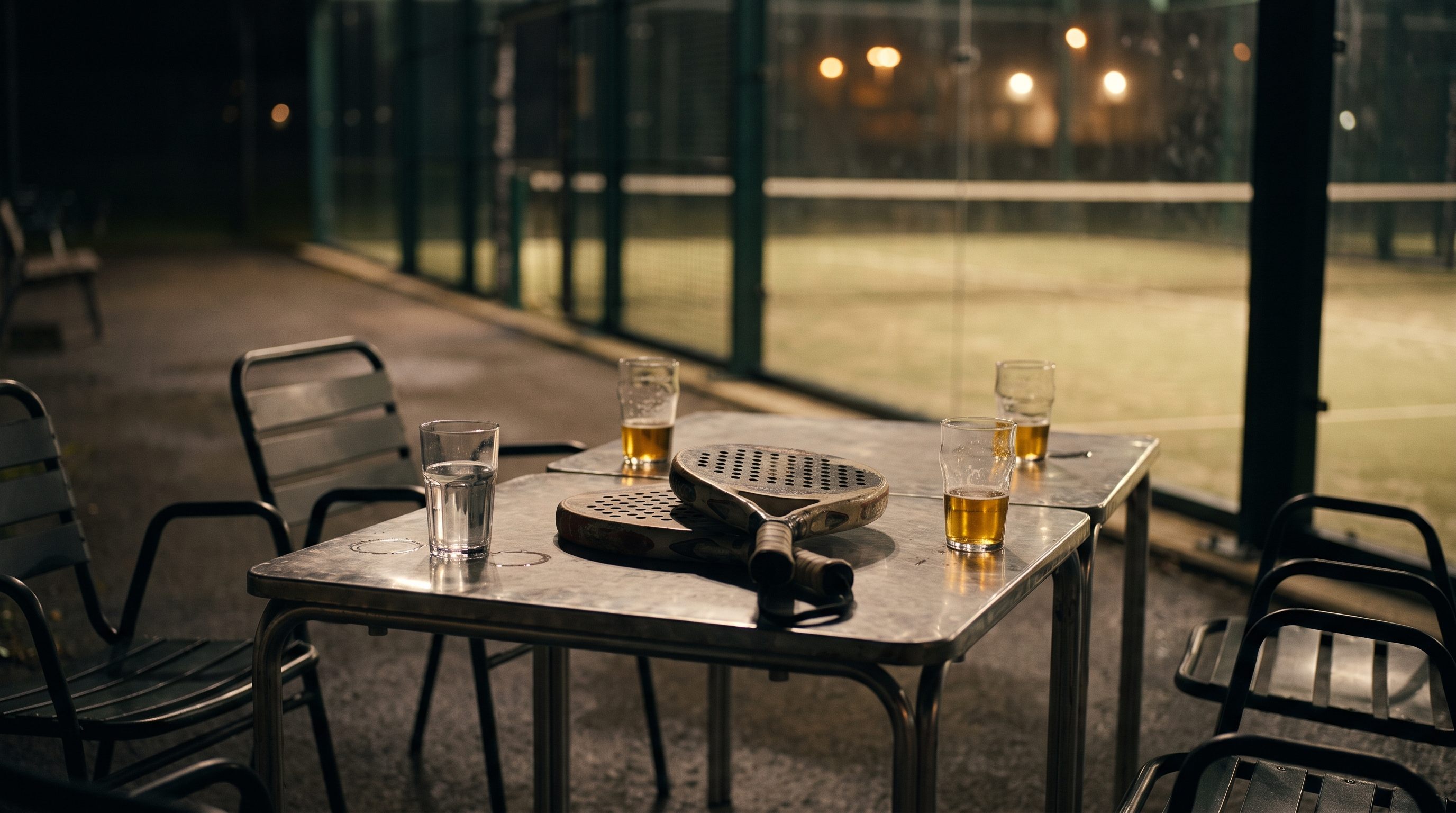
The last point falls and nobody leaves. This is the strange fact at the centre of padel, the one that does not show up in any rulebook. The match ends and the four players drift, almost without deciding to, toward a table. Somebody buys the first round. The rackets lean against a chair like tools set down after work. And then the match is played again, this time in words.
Padel people call it the third half. First set, second set, and then the part with no scoreboard. It is not an afterthought. Ask around any club and you hear the same quiet admission: the table is half the reason they come.
Why this sport and not others? Part of it is arithmetic. Four people share a small court, close enough to hear each other breathe, mishit, apologise, laugh. A singles sport builds a wall between two people. The net is a border and the opponent is a problem. Doubles inside glass builds something else. You spend an hour reading your partner's shoulders, covering their mistakes, being covered in turn. Even your opponents are collaborators of a kind: without their lob there is no smash worth retelling.
And retelling is the point. The third half is where the match gets its final score, the real one. That impossible ball off the back glass gets slower and more improbable with each version. The double fault at five all is confessed and forgiven. The argument about whether the ball clipped the wire is reopened, enjoyed, and abandoned without a verdict, because a verdict was never the point.
What does it mean that this half has no scoreboard? Maybe this: the court supplies the pretext, and the table supplies the reason. On court everything is counted. Points, sets, sides, who serves. The counting is what makes it a game. But counting also holds people at a certain distance. When the counting stops and the four of you sit down, the hierarchy of the last ninety minutes dissolves. The player who carried the match and the player who shanked the final smash drink the same drink. Nobody is up a break at the table.
There is an older shape underneath this: the meal after the work. Harvest tables, crew dinners, the drink after the shift. Padel did not invent the ritual. It just built a very good machine for producing it. Four strangers can walk onto a court and, one hour later, be four people with a shared story and a standing appointment. The court manufactures the story. The table is where it is ratified.
We notice something else, too. The third half is the part of padel that cannot be clipped, posted, or ranked. There is no highlight reel of people sitting down. It resists the feed completely, which may be why it feels more and more like the luxury. An hour in which the only replay is spoken, the only audience is present, and the only metric is whether anyone stands up to leave. Usually nobody does, not for a while.
So when we say the sport is played by four, we undercount. It is played by four and then continued by four, and the continuation is where partners become friends and opponents become next week's partners. The scoreboard decides who won. The table decides whether it mattered.
The last point falls. Nobody leaves. That is the game.
VÆN / NothinGiven.